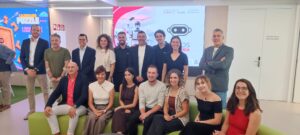
Retos Robótica, promoted by Navarre Government, ADACEN, NAIR Center and Centro VidAAs and funded by Fundación ‘la Caixa’, connects social needs with companies to drive solutions based on robotics and artificial intelligence.
Pamplona, 22 September 2026 — Retos Robótica is an initiative that aims to develop technological solutions to help improve the independence, inclusion and quality of life of the elderly and people with disabilities. The project is driven by the Government of Navarre, ADACEN, NAIR Center and Centro VidAAs, and funded by Fundación ‘la Caixa’; it seeks to connect real social needs with the capabilities of companies, technological centres, social organisations and the research community.
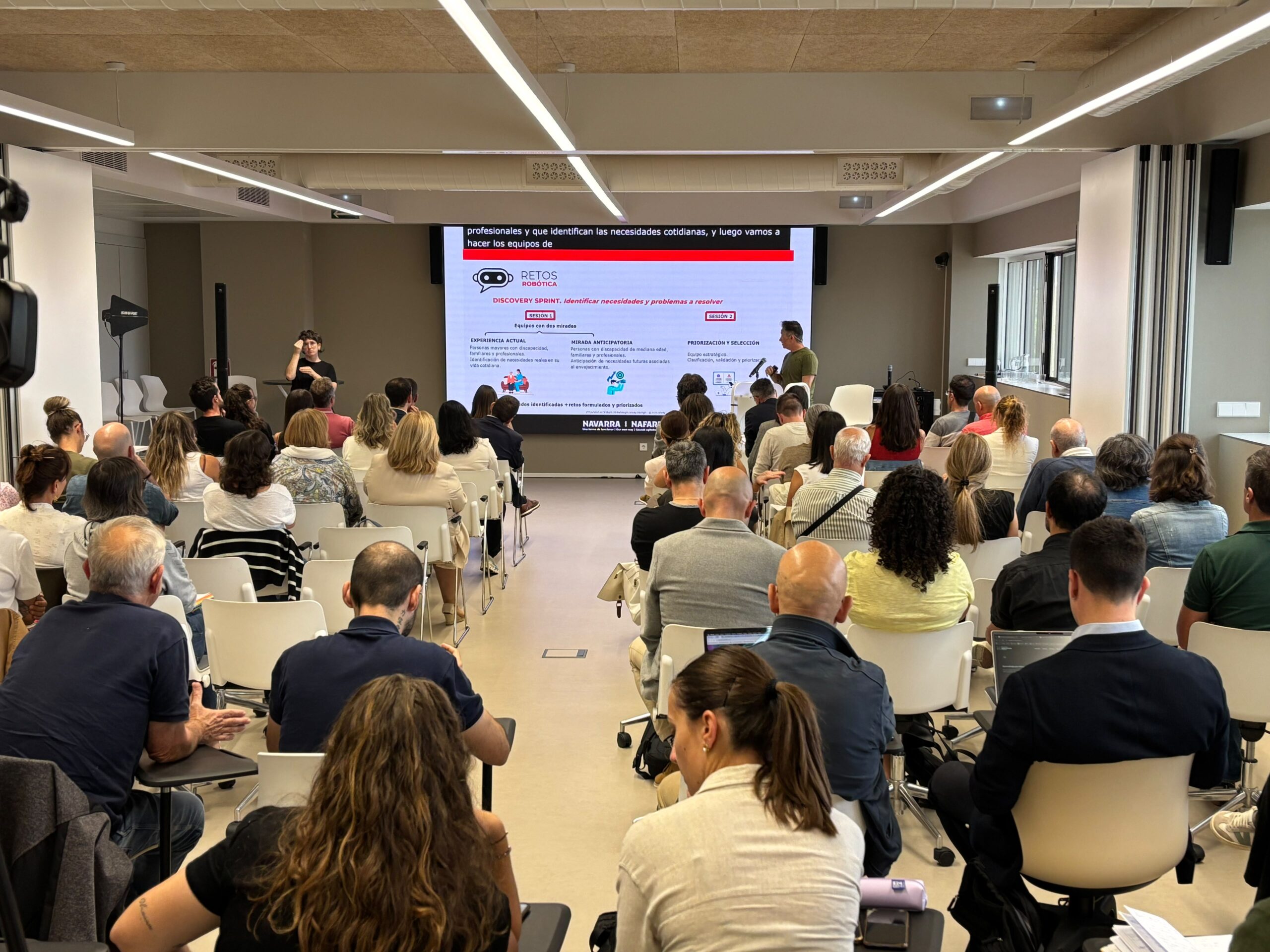
The first stage of this initiative took place on 16 and 17 September, with two conferences organised by NAIR Center, and held at the Polo de Innovación Digital de Navarra and the Centro VidAAs in Sarriguren. Around 70 people from companies, social organisations, technological centres, public administrations and educational institutions.
Robotics as a tool for addressing real needs
The event on 16 September provided an opportunity to discuss the current possibilities offered by robotics and artificial intelligence in areas such as assistance, rehabilitation, mobility, care and support.
The event began with an opening address by Agurtzane Martínez, Director-General for Science, Technology and Innovation at the Government of Navarre and continued with a presentation by Concha Monje, a researcher and senior lecturer at Carlos III University of Madrid, who spoke on soft robotics and its potential in the care sector.
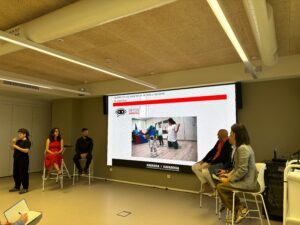
Following a question-and-answer session and discussion with the audience, the round-table discussion ‘Robotic Applications: Real Solutions’ took place, moderated by Concha Monje. Participants included PAL Robotics, with social and assistance robotics solutions; Inrobics, specialising in robotics and artificial intelligence applied to rehabilitation; Gogoa Mobility, with exoskeletons and solutions for mobility and rehabilitation; and Grupo Saltó, focusing on social robotics applied to assistance, care and support.
The second round-table discussion of the day, entitled ‘Technology at the service of people in Navarre’, was moderated by Ángela Bernardini.
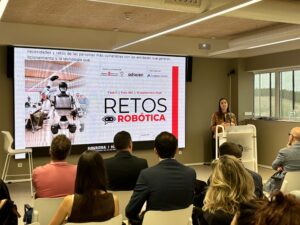
Next, Juan Carlos Recio, director of Beesy, presented the Retos Robótica project and explained the Retos Robótica initiative and the process for transforming the identified challenges into technological solutions capable of meeting people’s specific needs.
The event concluded with closing remarks by Juan Luis García, Minister for Universities, Innovation and Digital Transformation of the Government of Navarre.
From reflection to technological demonstration
The event continued on 17 September at the Centro VidAAs in Sarriguren, with an opening address by Txerra García de Eulate, Director-General for Planning, Coordination, Innovation and Evaluation of Public Policies.
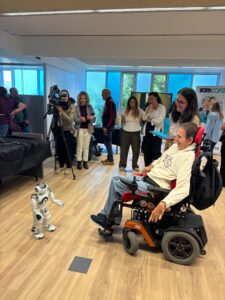
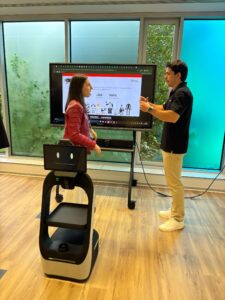
This was followed by a technology showroom with station-based demonstrations, in which each organisation had its own space to display its solutions, explain how they work and interact with attendees.
PAL Robotics, Inrobics, Gogoa Mobility and Grupo Saltó took part in this event, offering a hands-on introduction to their applications in assistive robotics, rehabilitation, mobility, care and support to social organisations, companies, public administrations, students and research staff.
Retos Robótica, also in the media
Retos Robótica also received significant media coverage, with the press highlighting the initiative and the opportunities offered by robotics and artificial intelligence to address social needs and improve people’s independence and quality of life.
Among them, Navarra TV covered the initiative in an interview featuring Gorka García, Managing Director of the NAIR Center; Agurtzane Martínez, Director-General for Science, Technology and Innovation at the Government of Navarre; and Idoia Urmeneta, Coordinator of the Centro VidAAs. During the interview the focus was on the need to direct these technologies towards the most vulnerable people, especially the elderly and people with disability, and on their potential to facilitate everyday activities, promote independence and generate more inclusive environments.
Watch the full interview here.
COPE also covered the project, increasing its visibility and commitment to the project and its commitment to bringing technological innovation in line with people’s needs. Full interview:
https://www.cope.es/emisoras/navarra/podcast/episodios/12-20h-14-septiembre-2026-herrera-cope-navarra-20260914_3435933.html