The Professor of Algebra gave a seminar in Pamplona in which she addressed the risks posed by pernicious algorithms and the keys to responsible, regulated design.
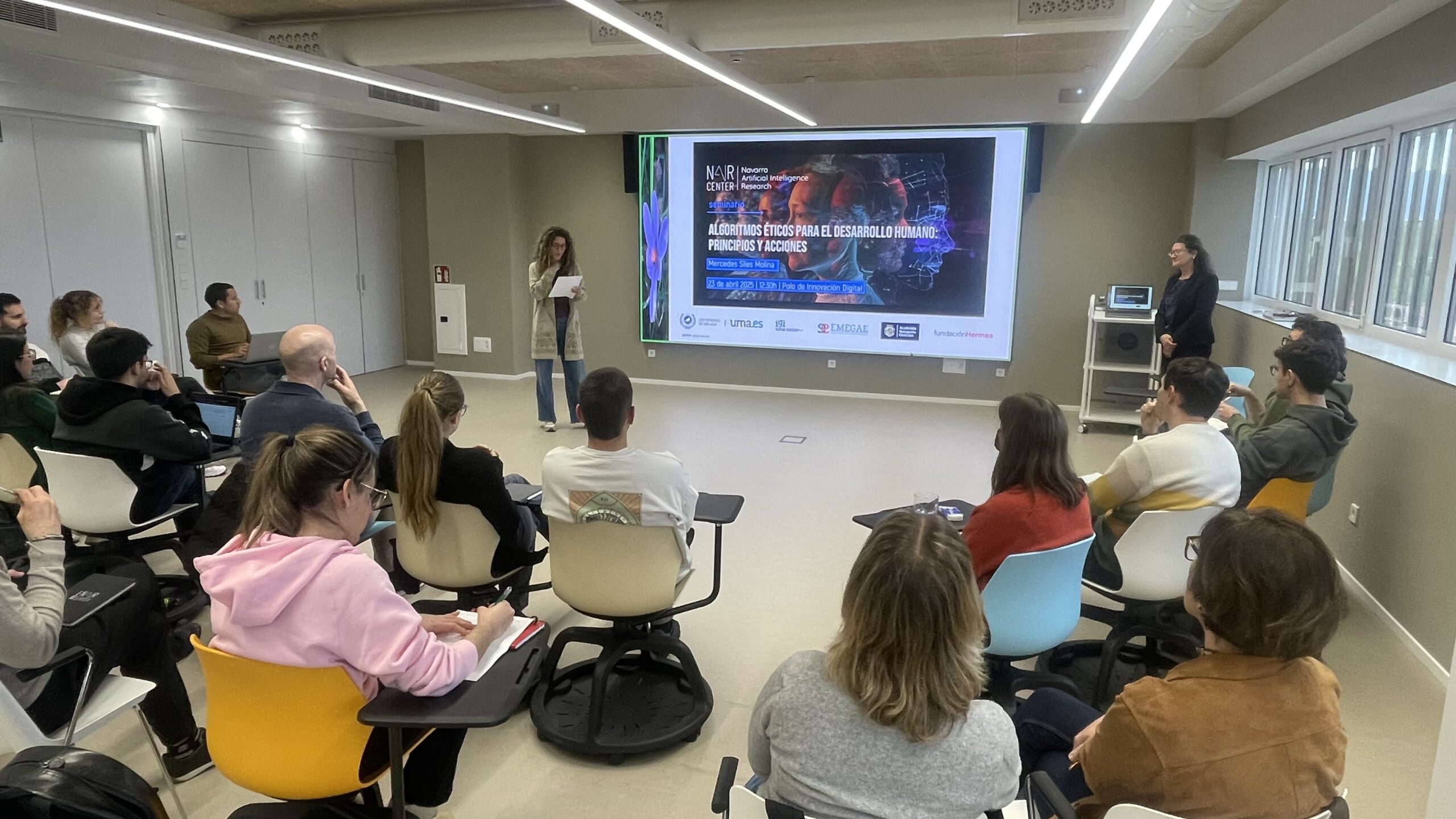
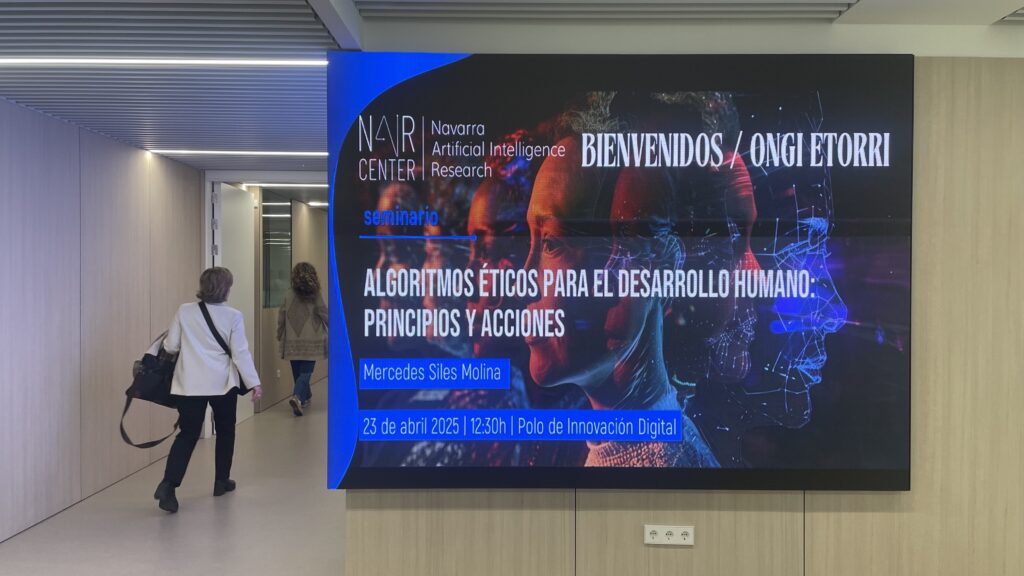
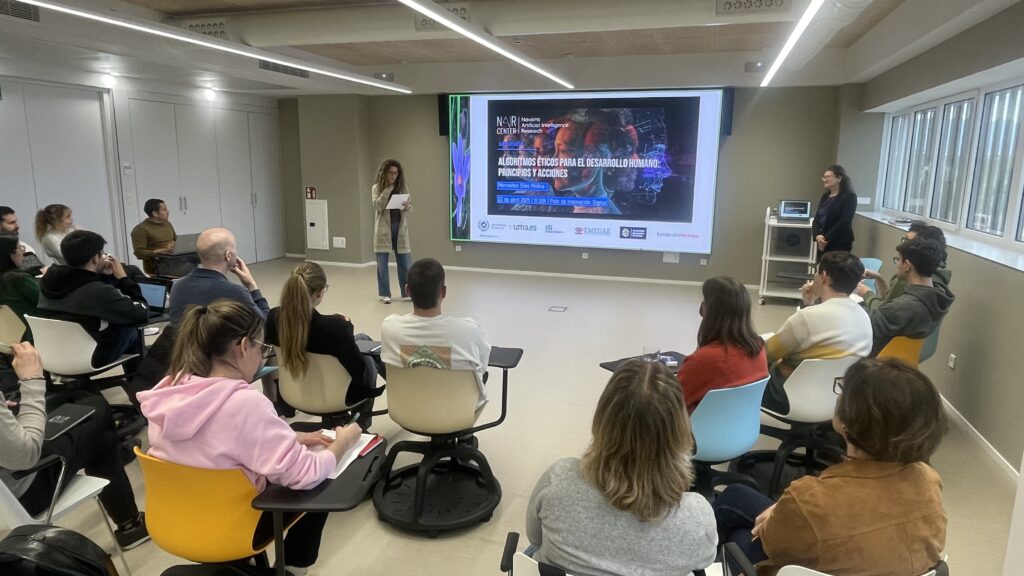
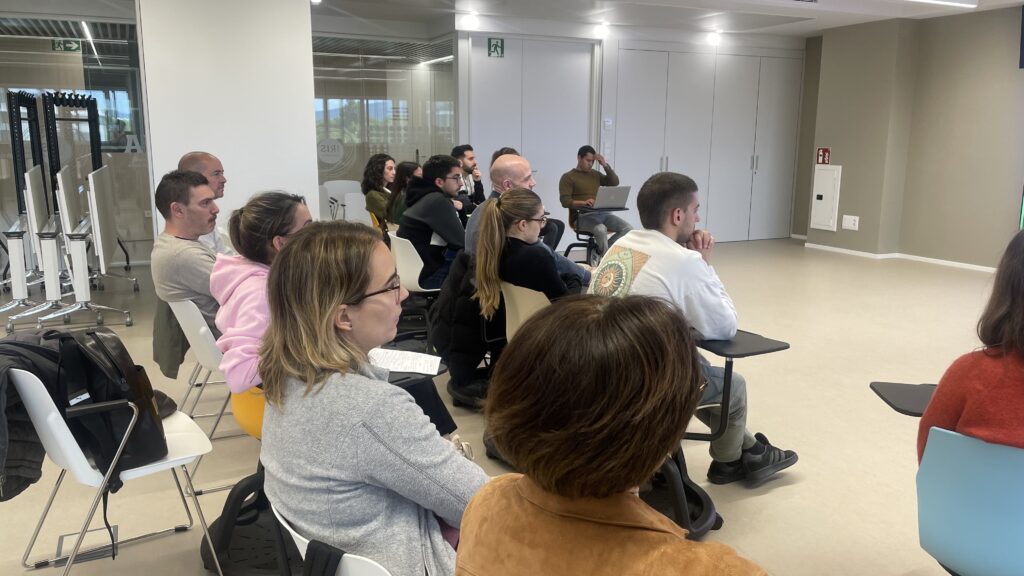
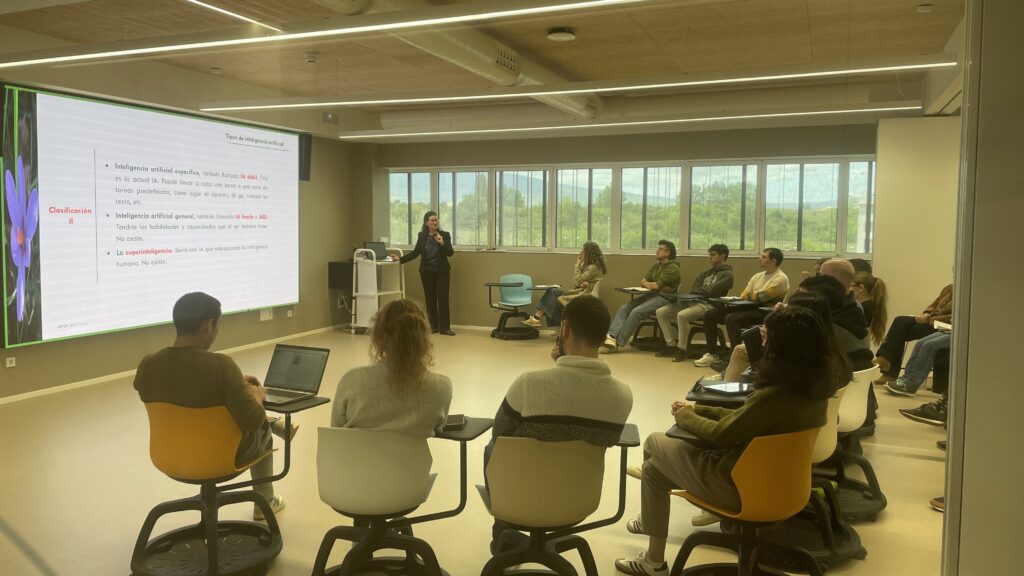
Pamplona, 23 April 2025 — Artificial intelligence (AI) raises urgent challenges that require reflection, regulation and clear principles. This was the argument made by Professor of Algebra Mercedes Siles Molina during the seminar “Ethical algorithms for human development: principles and actions”, organised by NAIR Center at the Navarra Digital Innovation Hub. The seminar brought together around twenty people interested in the social and ethical challenges that accompany this technological development.
Mercedes Siles Molina opened with a historical overview of AI, highlighting both international figures such as John McCarthy and Spanish pioneers such as Leonardo Torres Quevedo — inventor of the Telekino (1903) and the Chess Player (1912) — and Ángela Ruiz Robles, who in 1940 created the Mechanical Encyclopaedia, regarded as a forerunner of the e-book.
“Mathematics is the language of artificial intelligence, and the algorithm is its grammar,” Siles stated, warning that pernicious algorithms are already in operation. They can create artificial needs, manipulate decisions, deliver biased content and actively contribute to disinformation. She warned in particular about the effects of generative AI tools, whose deployment has been shown to increase both the volume and the variety of false content, while retaining a strong capacity to persuade. In response to these risks, the professor stressed the need for robust ethical and regulatory frameworks, and highlighted the role Europe can play in regulating AI.
Siles also pointed out that language is a limitation for AI: “No language fully captures reality.” Along these lines, she announced her forthcoming book “Spanish: the language of Intelligence”, in which she reflects on the relationship between language, knowledge and artificial intelligence.
The mathematician works with Fundación Hermes, a non-profit organisation that promotes ethical, responsible and people-centred digital development. In particular, she coordinates the seminar “Ethical and responsible algorithms for human development”, which includes specialists such as Roberto Andorno (University of Zurich), Gemma Galdón Clavell (CEO of Eticas.ai) and Ulises Cortés (Universitat Politècnica de Catalunya). The seminar proposes the R2T2 model (Revocability, Responsibility, Transparency and Traceability) as basic principles for ethical and responsible AI, together with two key dogmas: AI in the service of human beings, and AI is not and will not be a human being.
About Mercedes Siles
Mercedes Siles Molina is Professor of Algebra at the University of Málaga, a full member of the Academia Malagueña de Ciencias and former Director-General of ANECA. She has an extensive track record in academic quality assessment, scientific leadership and the promotion of equality. She has driven initiatives such as the ongoing study on the university gender pay gap, the introduction of micro-credentials with a gender perspective and the reform of criteria in Health Sciences.
In addition, she has published more than 60 works in mathematics, art and knowledge management, and has curated exhibitions such as “The flavour of Mathematics” and “Parallel universes in dialogue”. She has collaborated with institutions in more than 20 countries and has received recognitions such as the Farola Ciencia Award, the Meridiana Award and inclusion in the Top 100 Women Leaders. She is also the driving force behind programmes such as STEMatEsElla and founder of the Andalusian node of AMIT.
Mercedes Siles Molina will be one of the speakers at the upcoming National Congress on Artificial Intelligence organised by NAIR Center and the Government of Navarra, which will take place on 6 May at the Baluarte Conference Centre, Pamplona.
More information: https://www.naircenter.com/evento-congreso-nacional-ia/